Does morality matter? Is it an objective or a subjective experience? These are questions for philosophers, but last week I found myself tackling them while riding a stationary bike at a hotel gym. I like to read The New Yorker while exercising; expanding my mind a little as well as strengthening my knees. The article, by Larissa MacFarquhar, was titled “How to be Good.” Intriguing. It was all about one of today’s most brilliant philosophers, an Oxford recluse named Derek Parfit.
http://www.newyorker.com/reporting/2011/09/05/110905fa_fact_macfarquhar
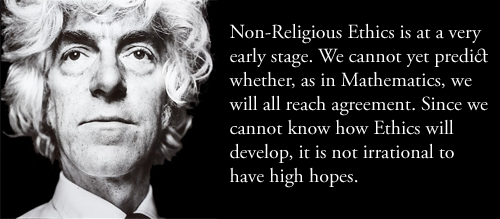
Parfit, after distilling the best ideas from Greek philosophers and more modern principles of morality like Kant, thinks there are universally true answers to moral questions, almost in the same way mathematics has concrete answers. These truths, obtained through intuition and critical reasoning, remain the same whether we humans are able to perceive them (hence the term “universal”), or not. Buddhist monks have been known to teach from his first book, “Reasons and Persons,” much to his surprise. And now he has published an epic tome, “On What Matters.”
“Is the truth depressing? Some may find it so, but I find it liberating, and consoling.” Parfit
Why even try to explain his philosophy in 400 words or less? Because this morning I learned that the state of Georgia just put a man, Troy Davis, to death, and because I had always believed in the death penalty, and because, thanks in no small part to my children, I no longer do. Will there always be grey areas for me? Yes, but… Parfit’s main idea is that rules of morality, those which might be accepted by all, would also have the best possible consequences – this is called “…rule-consequentialism.” In the case of a state-sponsored execution, we have to ask what is the best consequence to a country, a state or the doctor pushing that syringe?
I wonder why our country is still imposing the death penalty. According to Amnesty International, we rank as the fifth highest country still performing legal executions; right behind Yemen, North Korea, Iran and no.1 – China. “The death penalty has been abolished for all crimes by every country in Western Europe. In Eastern Europe the Russian Federation has held a moratorium on executions and death sentences for more than 10 years.” What would Parfit have to say about this? If in fact he believes that life, as do I, cannot be arbitrary, then neither can death.


 MountainMornings
You have prompted me to wonder how we (this country) can support the death penalty but forbid assisted suicides.
That is a great question, although I think Oregon does permit assisted suicides, so maybe in time the rest of the country will catch up? On the right coast we call this “palliative care” and hope we have a doctor we can trust, with our life and our death.